Grey Water Damage in Village of West Clay: Category 2 Cleanup Guide
The first call usually comes in fast and breathless. A Village of West Clay homeowner finds a half inch of cloudy water spreading from the laundry room into the hallway, and within ten minutes she is on the phone with Village of West Clay Water Restoration trying to figure out if her hardwood is ruined. That water is what the IICRC calls Category 2, or grey water. It is not as toxic as sewage, but it carries enough soap residue, detergent, bacteria, and skin cells to make you sick if you ignore it, and it turns into Category 3 within roughly 48 hours if it sits.
Since founding Village of West Clay Water Restoration in 2018, our crews have walked into hundreds of grey water jobs across central Indiana. Aaron Christy built this company on a simple rule: if we cannot help, we will tell you directly. That honesty matters more with Category 2 work than almost any other call, because the line between save it and replace it is thin, and the wrong choice costs you thousands. What follows are real field stories from Village of West Clay and the surrounding area, with the numbers and decisions that shaped each outcome. If you are reading this with wet socks on, scroll, call, and we will be moving toward your address.
Quick Answer: What Is Category 2 Grey Water?
Category 2 water contains significant chemical, biological, or physical contamination and can cause illness if ingested or contacted. It requires extraction, antimicrobial treatment, controlled drying, and often selective demolition of porous materials. If the water sits longer than 48 hours, it reclassifies as Category 3 and the cleanup scope expands sharply.
When to Call vs. DIY
If the affected area is under 10 square feet, the water is fresh, and you can fully dry it within 24 hours, a wet vac and fans may be enough. Anything larger, anything that touched drywall or carpet pad, or anything that sat overnight needs professional water damage restoration to prevent mold and Category 3 escalation.
Red Flags That Mean Stop and Call Village of West Clay Water Restoration
- You can smell a musty or sour odor within a day of the loss
- Baseboards are cupping or paint is bubbling above the water line
- The subfloor feels spongy underfoot
- Water traveled through a ceiling assembly to a lower level
- You have already run fans for 48 hours and materials still read wet
Get Grey Water Handled Before It Turns Black
The 48 hour window is real, and grey water does not stay grey for long. If you are looking at a wet floor in Village of West Clay right now, call Village of West Clay Water Restoration. We are IICRC certified, BBB A+ rated, and we have been the straight answer crew in central Indiana since 2018. We will walk the loss with you, give you a clear scope, and if a mop and a fan will fix it, we will tell you that too.
IICRC Water Categories at a Glance
| Category | Source Examples | Health Risk | Typical Response |
|---|---|---|---|
| Cat 1 (Clean) | Supply line, faucet, rainwater | Low | Extract and dry in place |
| Cat 2 (Grey) | Dishwasher, washer, aquarium, shower drain | Moderate | Extract, sanitize, remove pad and wet drywall |
| Cat 3 (Black) | Sewage, river flood, toilet with feces | High | Full demo of porous materials, PPE, biohazard protocols |
Common Grey Water Sources in Village of West Clay Homes
- Dishwasher supply or drain line failures
- Washing machine hose bursts or overflows
- Shower pan leaks that have wicked into adjacent rooms
- Toilet overflows containing only urine and bowl water
- Aquarium ruptures larger than 20 gallons
- Sump pump discharge that backflows into a finished basement
- Clean water losses that sat untreated for more than 24 hours
- Refrigerator ice maker line failures behind the unit
- HVAC condensate pan overflows that drip through ceilings
What Category 2 Cleanup Costs in Village of West Clay
| Loss Size | Typical Range | What It Covers |
|---|---|---|
| Small (1 room, under 200 sq ft) | $1,500 to $3,200 | Extraction, pad removal, drying, sanitizing |
| Medium (2 to 3 rooms or basement zone) | $3,200 to $7,500 | Above plus drywall cuts, content moves, longer dry time |
| Large (whole basement or multi level) | $7,500 to $18,000+ | Heavy demo, equipment fleet, often includes basement flooding response |
What Drives the Price Up or Down
- How long the water sat before extraction started
- Square footage and number of materials affected
- Whether hardwood, LVP, or carpet is involved
- Access to wet cavities behind cabinets or stair runs
- Insurance involvement and documentation requirements
- After hours or weekend emergency dispatch fees
Health Risks You Should Take Seriously
Grey water carries bacteria, detergents, food particles, urine, and sometimes mold spores. Direct skin contact can trigger rashes. Ingestion or aerosol exposure can cause gastrointestinal illness, especially in children, seniors, and anyone immunocompromised. If you have an open wound, do not wade in. If you have respiratory conditions, leave the affected area until extraction is finished.
Bacterial counts in grey water double roughly every few hours at room temperature. A dishwasher discharge that was relatively benign at hour one can host significant colonies of E. coli, Klebsiella, and Pseudomonas by hour twenty four. That is why our crews in Village of West Clay treat the 48 hour clock as a hard line, not a guideline.
Symptoms That Warrant a Doctor Visit
- Persistent nausea or diarrhea within 48 hours of exposure
- Skin rash or itching on contact areas
- Worsening asthma or new wheezing
- Eye or sinus irritation that lingers after you leave the space
- Low grade fever or unexplained fatigue in the days after cleanup
Insurance and Grey Water Claims
Most homeowner policies cover sudden and accidental Category 2 losses from appliances and plumbing. Gradual leaks usually are not covered. We document everything, photos, moisture logs, scope sheets, so your adjuster has what they need. If we cannot help, we will tell you directly before a single piece of equipment comes off the truck.
Do This Before the Adjuster Arrives
- Photograph the source and the damaged area
- Save the failed part (hose, valve, pump)
- Keep receipts for anything you buy to mitigate further damage
- Do not throw out wet contents until they are inventoried
- Write down the date and time you first noticed the loss
- Ask your carrier for the claim number and adjuster contact in writing
The Village of West Clay Water Restoration Category 2 Cleanup Process
- Source containment. We shut off the supply, cap the line, or stop the appliance before anything else.
- Moisture mapping. Thermal cameras and pinless meters show us how far the water migrated, including water damage behind walls that is not visible at the baseboard.
- Extraction. truck mounted or portable units pull standing water and saturated pad moisture.
- Selective demolition. Wet carpet pad, swollen MDF baseboard, and drywall below the flood line typically come out. Tack strip is replaced.
- Antimicrobial application. EPA-registered products neutralize bacteria on framing, subfloor, and remaining substrate.
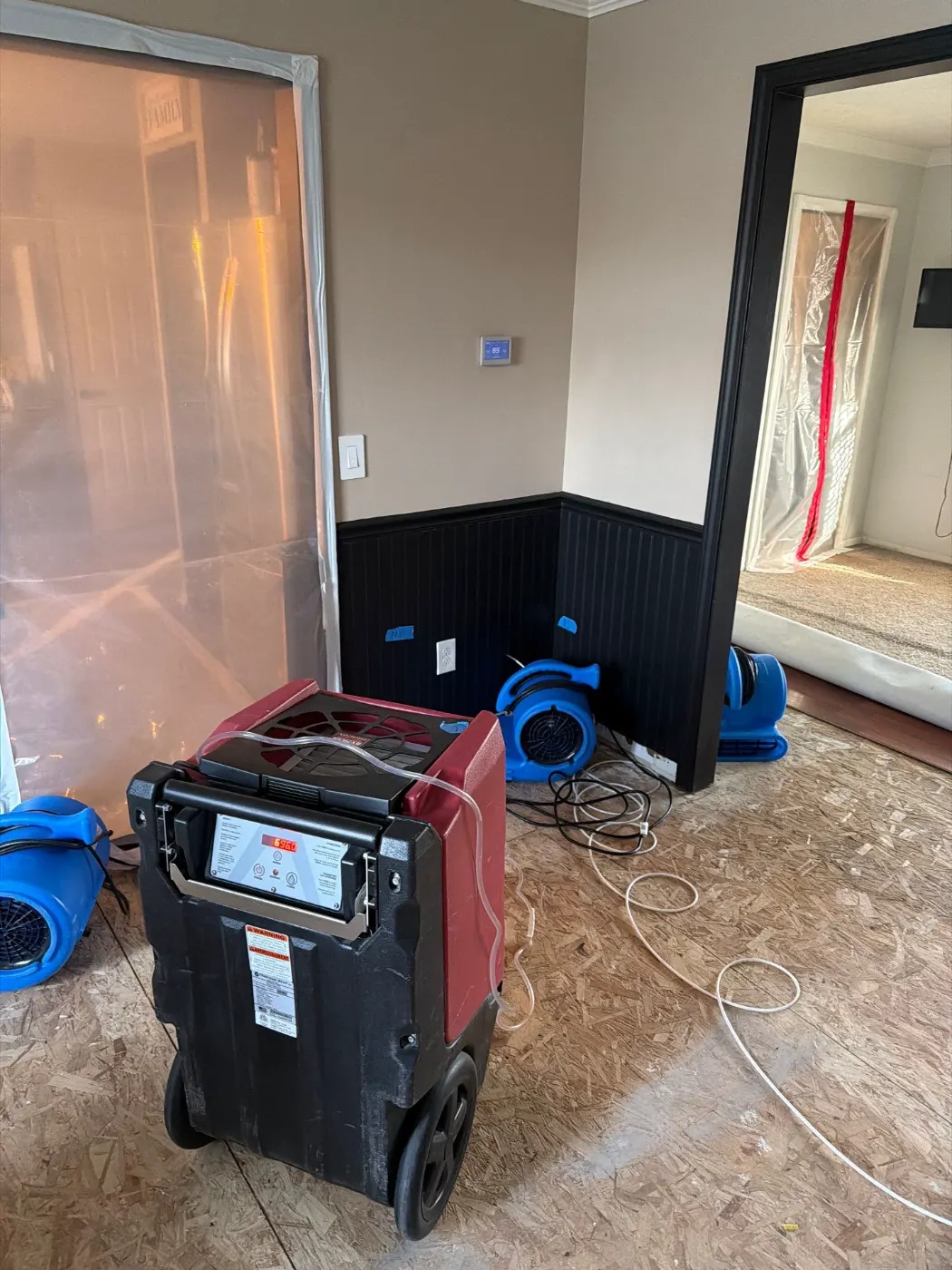
- Structural drying. Air movers and LGR dehumidifiers run for three to five days, with daily moisture readings logged for your insurer.
- Reconstruction. Baseboard, drywall, paint, and flooring go back in once readings hit dry standard.
Equipment You Will See on Site
- Submersible pumps for standing water over two inches
- Self propelled extractors that ride over carpet to pull pad moisture
- Centrifugal and axial air movers, typically one per 50 to 60 linear feet of wall
- Low grain refrigerant dehumidifiers sized to the affected cubic footage
- HEPA air scrubbers when bioaerosol risk is elevated
- Containment poly and zipper doors to isolate the work zone from clean living space
Frequently Asked Questions
How quickly does grey water become Category 3 sewage-level contamination?
Under IICRC S500 standards, Category 2 water can degrade to Category 3 within roughly 48 hours, especially in warm conditions. In Village of West Clay basements during summer, we have seen it happen faster when organic material like carpet padding is involved, which is why same-day response matters.
Will my homeowners insurance cover grey water cleanup?
Most policies in Village of West Clay cover sudden and accidental grey water losses such as appliance failures or pipe bursts. Gradual leaks and maintenance issues are typically excluded. Village of West Clay Water Restoration documents every job with moisture readings, photos, and Xactimate estimates so your claim has the evidence the adjuster needs.
Can I just use a shop vac and fans instead of calling a professional?
For a small, contained spill caught immediately, sometimes yes. Once water has soaked into drywall, padding, or subfloor for more than a few hours, DIY drying leaves hidden moisture that grows mold. Village of West Clay Water Restoration will tell you honestly during the inspection if your loss is small enough to handle yourself.
How long does grey water cleanup take in a Village of West Clay home?
A typical single-room grey water loss takes three to five days of active drying after extraction and antimicrobial treatment. Larger finished basements or jobs involving hardwood floors can run five to seven days. Daily moisture readings confirm when materials hit dry standard.
Does grey water always cause mold?
Not always, but the risk is real. Mold needs moisture, organic material, and time, and grey water provides all three. Proper extraction, antimicrobial application, and drying to documented standards within 48 to 72 hours dramatically reduces mold risk in your Village of West Clay property.
Have a restoration question?
Our IICRC certified Village of West Clay crew is ready to help. Free assessments, estimate based on what we can sees, no pressure.